

NP: Deadly Bacteria Hack the Human Brain
By James W. Astrada
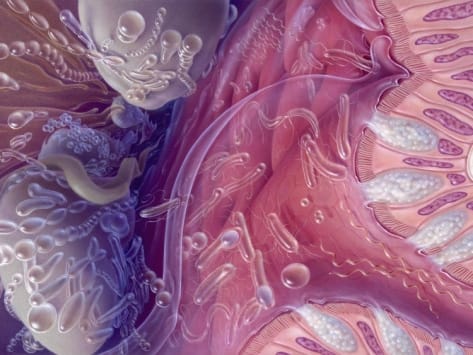 Bacteria are no doubt one of the most intriguing organisms on the planet Earth due to its complexity. In the right environment, Bacteria would reign supreme over the rest of the animal kingdom. It seems that through recent studies concluded at the Center for Infectious Diseases (Oxford Journal), a strong bacterium has been identified in tap water that is killing humans. Naegleria fowleri is a climate-sensitive, “thermophilic” ameba found in the environment, including warm, freshwater lakes and rivers. It affects the brain through the olfactory nerves of the infected killing it in a number of days. In 2011, two cases in Louisiana died shortly after being infected with meningoencephalitis.
Oddly after studying the causes, researchers found that the infected only came into contact with household items used for sinus irrigation and tap water. Normally many agencies tell the public to boil their water in case of contamination; however this is the first case of PAM (Primary amebic meningoencephalitis) in the United States associated with household plumbing and the first cases associated with nasal irrigation devices. A study to identify PAM in the southern United States added to recent reports of contamination in Kansas, Virginia, and Minnesota. Physician now are urging patients to use distilled, steam, and boiled water before attempting to utilize sinus/nasal irrigation.
To make matters worse, another bacterium under study at Michigan State University concludes that most humans contain a dormant bacteria called Toxoplasma gondii (parasitic in nature) may be harmful and could lead to suicide. About 10-20% of people in the U.S. supposedly carry this dormant parasite within their bodies that was considered “harmless.” After recent studies, this may not be the case. It seems that Toxoplasma gondii can become inflamed over time and can damage brain cells while producing dangerous metabolites. Lena Brundin, one of the lead researchers of the team had commented on how the process affected the human being over time:
“Previous research has found signs of inflammation in the brains of suicide victims and people battling depression, and there also are previous reports linking Toxoplasma gondii to suicide attempts.”
Could this parasitic bacterium only affect those with depression or signs of unhappiness? Would these negative emotions feed this parasite, “waking it” from its slumber to give it the proper fuel for growth based on human unhappiness? Brundin may believe so:
“In our study we found that if you are positive for the parasite, you are seven times more likely to attempt suicide.”
More studies by the research team indicated that those infected with this parasitic bacterium were more likely to commit suicide. There are some anomalies where some people who had the parasite were able to fight the symptoms and avoid thoughts of suicide. The bacterium itself is found in many mammals’ feces, unwashed vegetables, consuming undercooked food/meat, and contaminated water containing eggs of the parasite. These are just few examples of many bacteria that engage themselves in our daily activities and life styles. Humans must take care of their eating habits to avoid infection and the possibility of falling victim to what most deem as “harmless.”
T. gondii has the ability to “hack our immune cells making this the first known bacteria to control its host’s immune system. Researchers have also found that these bacteria hack the brain as well prompting behavioral changes and never leave the host. To add to its amazing complexity, the bacteria utilize a protein defense system to protect themselves from being eliminating by the body’s defenses. It is obvious that these bacteria are unexplainable wonders of nature that science will have a hard time eliminating.
These few examples are just breaking the ice on the multitude of dangerous organisms that threaten human existence on this planet. Perhaps science can learn to crack the code on bacteria defense systems that seem to withstand any type of bombardment. Imagine the wonders or capabilities humans would have if they could utilize the same system of these bacteria. In the meantime, we should be vigilant of treating our tap water via filters, steam distillation, or boiling, how we cook our food, hygiene of our domestic animals and take care in our daily activities. With these few precautions, we can protect our brains; the very location these bacteria seem to have an interest in.
References
Staff. “Protein Helps Parasite, Toxoplasma Gondii, Survive in Host Cells.” Science Daily (December 2010).
Staff. “Researchers Discover How ‘Promiscuous Parasites’ Hijack Host Immune Cells.” Science Daily (September 2011).
Staff. “Common Parasite May Trigger Suicide Attempts: Inflammation from T. Gondii Produces Brain-Damaging Metabolites” Science Daily (August 2012).
cid.oxfordjournals.org/content/early/2012/08/22/cid.cis626.abstract
© Copyright 2012. James Astrada.
Discover more from Robert JR Graham
Subscribe to get the latest posts sent to your email.